Behind the scenes of motion design: how a premium video is born
Iconic video ≠ Luck. It’s system.
You see a video that goes viral. Wonder if it’s luck or system?
System. Always system.
I’ll share real stories from behind the scenes of videos that worked.
Case 1: The video that generated $75k in sales
The brief: Furniture e-commerce. Sales declining. Competitors showing better. “We need a video proving quality.”
The problem: Furniture is static. How show premium-ness via video?
The concept: Don’t show furniture. Show emotion of living better.
Narrative: From stress to serenity.
Behind the scenes:
- Week 1: Found 10 different apartments
- Week 2: Filmed real customers feeling well
- Week 3: Motion design transforms emotion visually
- Week 4: Refinements + delivery
Result: 30 seconds showing no furniture. Shows comfort, peace, security.
ROI: 75 sofas sold in 1 month. $75k.
Case 2: The video that generated 2 million views
The brief: Cleaning service. Market saturation. “I don’t know how to stand out.”
The concept: Don’t tell. Show transformation in 10 seconds.
Dirty → Clean. But emotionally, not just visually.
Behind the scenes:
- Found 5 homes that were “before” real
- Filmed the process (more dramatic than finished)
- Music builds with transformation
- Every cut syncs with music
Result: 2.1M views on TikTok. Contact database tripled.

Case 3: The video that generated B2B partnerships
The brief: Production agency. Market saturation. “Position as short-video specialist.”
The concept: Show we understand algorithm. Make a video that educates using itself as example.
Goal: start conversations with bigger agencies.
Behind the scenes:
- Script that teaches + proves social proof
- Effects that show “we know this”
- Design clearly shows structure (beginning/middle/end)
- Every frame is a lesson
Result: Didn’t go mega-viral. But generated 50+ qualified messages. 3 partnerships formed.
The pattern you see
Working videos have:
- Clear concept (not just pretty)
- Narrative that touches emotion (not just info)
- Execution respecting the platform (not generic)
- Perfect timing (feels planned)
- Real purpose (not just content for content)
What doesn’t work
- Trying to be everything for everyone
- Effects that communicate nothing
- Confused narrative
- Bad timing
- Generic content anyone could make
The final lesson
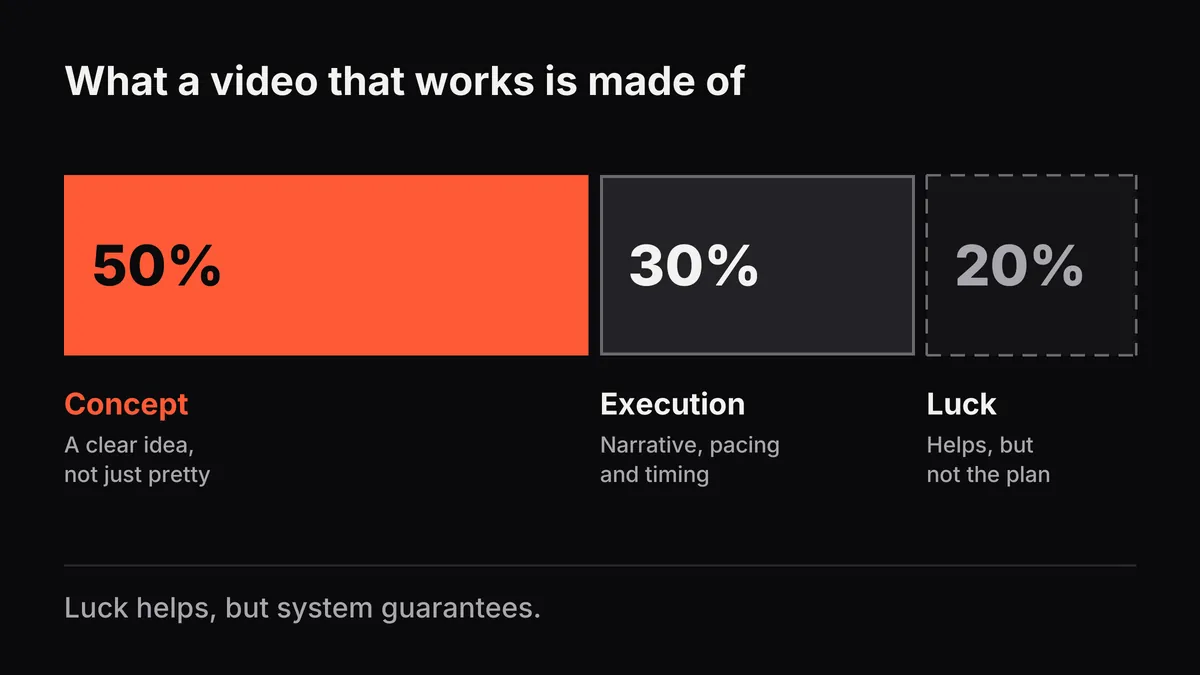
A good video is 50% concept, 30% execution, 20% luck.
Luck helps, but system guarantees.
What kind of story would you love to tell in video?