Vertical vs. horizontal video: which format to choose
The vertical video era has arrived
In 2015, vertical was amateurish.
In 2026, vertical is professional.
TikTok, Instagram Reels, Stories — all vertical. If you’re only doing horizontal, you’re missing 60% of potential views.

Vertical (9:16)
Made for holding phone upright.
Where: TikTok, Instagram Reels, YouTube Shorts, Stories
Pros: Mobile-optimized, immersive, algorithm-favored, more space for text
Cons: Doesn’t work on TV, doesn’t work for presentations, quality suffers on large screens
Horizontal (16:9)
Made for cinema/big screen.
Where: YouTube (long videos), LinkedIn, Presentations, Websites
Pros: Universal standard, better for complex content, works on any device, professional in B2B
Cons: Phone shows black bars, less impact in feed, less immersive on mobile
Square (1:1)
The middle ground.
Where: Instagram Feed, Ads, Stories
Pros: Works everywhere, safe, adapts well
Cons: Less impact than vertical, less space than horizontal, mediocre everywhere
Smart strategy
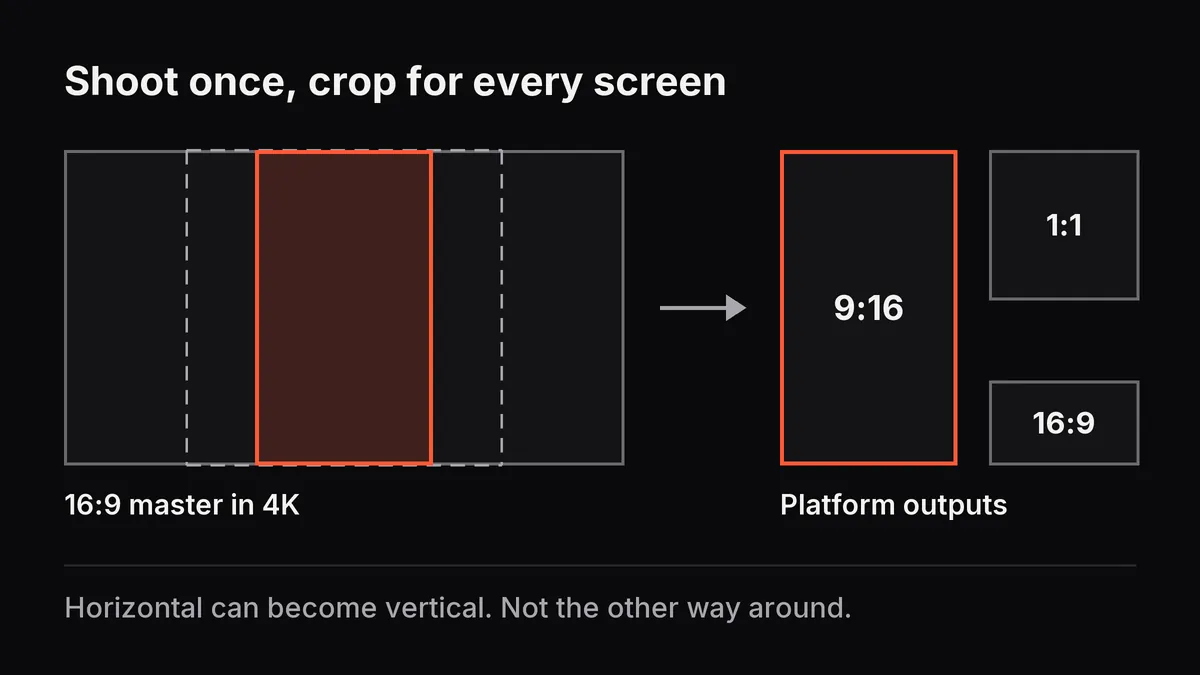
Don’t choose ONE format. Film smart:
- Create in format that makes sense for content
- Shoot in high resolution (4K minimum)
- Recut/adapt for each platform
A high-quality horizontal video can be cropped vertical. A vertical video can’t become horizontal without quality loss.
Practical examples
Product e-commerce:
- Horizontal: environment + product
- Vertical: 100% product focus, more drama, more engagement
Education:
- Vertical: person talking, simple
- Horizontal: presentation + person, more content
The final rule
If 80% of audience watches on mobile, go vertical. If 80% watches on computer/TV, go horizontal. If 50/50, still go vertical (algorithms favor it + easier to adapt to horizontal).
What format does your audience prefer?